Building Better Educational Materials with the Back to School Book and Pen SVG Digital Product
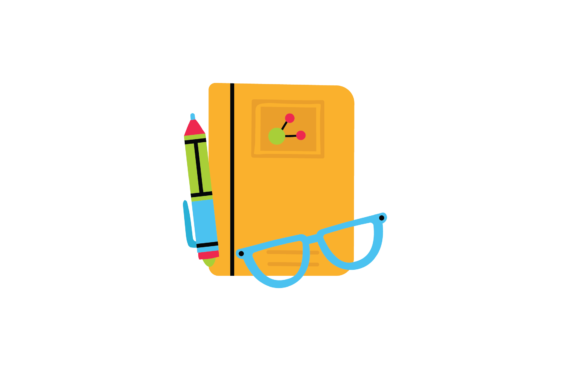
Digital design assets have reshaped how educators, content creators, and small business owners approach visual communication. Among the most versatile resources available today is the Back to School Book and Pen SVG digital product, a carefully crafted set of vector files that combines classic academic imagery with modern design flexibility. Whether you are producing classroom decor, promotional materials, or digital learning aids, this design offers a practical foundation for a wide range of projects.
The kit includes seven file formats — AI, EPS, SVG, DXF, JPG, and PNG — each rendered at a canvas size of 1920 pixels by 1280 pixels. This ensures that whether you are working in Adobe Illustrator, a cutting machine like Cricut or Silhouette, or simply need a high-resolution raster image for print, you have a ready-to-use option. The design is easy to use and can be edited according to your needs, making it accessible to both seasoned designers and those just starting out.
Understanding the File Formats and Their Real-World Uses
Each format included in the Back to School Book and Pen SVG digital product serves a distinct purpose. Knowing which one to use and when can save time and expand your creative possibilities.
- AI and EPS files are industry standards for professional vector editing. If you are a graphic designer or a print shop operator, these formats allow you to open the artwork in Adobe Illustrator or CorelDRAW, adjust individual elements, change colors, and rescale without any loss of quality. The layered structure of the AI file means you can isolate the book graphic from the pen, tweak the composition, or add your own text and branding elements.
- SVG files are the backbone of modern web and cutting machine workflows. Because SVG is a scalable vector format, it renders crisply on any screen size — from a smartphone display to a large classroom projector. For crafters, SVG files import directly into Cricut Design Space or Silhouette Studio, allowing you to cut the design from vinyl, cardstock, or heat transfer material.
- DXF files are also used in cutting and CAD applications. Some machines and software prefer DXF over SVG, so having both ensures compatibility across different hardware. If you are producing stencils, stickers, or layered papercraft, the DXF format gives you a reliable alternative.
- JPG and PNG files cover all raster-based needs. The JPG version works well for email attachments, social media posts, and quick previews. The PNG file, with its transparent background, is ideal for placing the design over other images, creating flyers, or embedding in digital presentations without a messy white box around the edges.
All files share the same 1920x1280 pixel canvas size, which means the proportions remain consistent regardless of format. This uniformity is especially helpful when you are preparing a set of materials — for example, a banner, a sticker sheet, and a social media graphic — and you need the same visual theme to carry across every piece.
Practical Applications Across Different User Groups
The Back to School Book and Pen SVG digital product is not a one-size-fits-all asset; rather, it adapts to the specific workflows of different professionals and hobbyists. Below are several common scenarios where this design adds genuine value.
Educators and School Administrators
Teachers often need to create a welcoming classroom environment on a tight budget and with limited design experience. The book and pen motif is instantly recognizable and communicates learning, literacy, and preparation. With the SVG file, you can cut vinyl lettering and shapes for bulletin boards, door decals, or wall murals. The JPG and PNG files can be printed on letter-sized paper for name tags, bookmarks, or folder covers. Because the design is editable, a teacher could easily duplicate the graphic, resize it, and arrange multiple copies on one page to maximize material usage.
School administrators preparing back-to-school newsletters, parent handouts, or event signage can drop the PNG version directly into Canva, Microsoft Word, or Google Slides. The transparent background means the book and pen graphic sits cleanly atop colored paper or school-branded templates. The consistent canvas size also makes it straightforward to align the design with other elements in a layout.
Small Business Owners and Etsy Sellers
For entrepreneurs who sell printable wall art, planner stickers, or classroom decor, this digital product provides a commercial-ready foundation. Because you receive both vector and raster formats, you can offer your customers multiple product variations — an SVG for digital cutting, a PNG for instant download, and a high-resolution JPG for print-on-demand items. The ability to edit the design in AI or EPS means you can customize colors to match a specific brand palette, add seasonal elements like apples or chalkboard backgrounds, or combine multiple graphics into a comprehensive back-to-school bundle.
Many sellers also appreciate that the design is easy to use and can be edited according to your needs, which reduces the time spent on technical adjustments and lets you focus on product photography, listing descriptions, and customer engagement.
Hobbyist Crafters and DIY Enthusiasts
If you own a Cricut, Silhouette, or other cutting machine, SVG and DXF files are your primary tools. The Back to School Book and Pen SVG digital product works straight out of the box for making iron-on transfers for tote bags, custom pencil cases, or teacher appreciation gifts. You can layer the book and pen with other cut files, adjust the scale to fit a mug or a notebook cover, and experiment with different materials like holographic vinyl, glitter cardstock, or adhesive foil.
Because the design is a single cohesive graphic rather than a complex multi-layered illustration, it cuts cleanly even on less expensive materials. The simple but recognizable silhouette reduces the risk of tearing or misalignment, making it a reliable choice for beginners who are still learning the nuances of blade pressure and material selection.
Characteristics That Enhance Practical Workflows
Several structural and design characteristics make this digital product stand out from generic clip art collections.
- Unified canvas dimensions. All formats share a 1920x1280 pixel canvas. This eliminates the need to manually crop or resize files when switching between applications. Whether you are importing the SVG into a web design tool or the JPG into a print layout, the aspect ratio stays consistent.
- Vector scalability. SVG, AI, EPS, and DXF files are resolution-independent. You can scale the book and pen graphic to fit a billboard or a business card without pixelation or quality loss. This is critical for professional print work where output resolution matters.
- Editable layers. The AI and EPS formats preserve individual elements as separate layers. This means you can hide the pen if you only need the book, change stroke weights, or recolor the graphic to match a specific theme. For educators who want to create a series of icons — open book, closed book, book with pen, book alone — this layered approach saves hours of redrawing.
- Transparent background support. The PNG file comes with a transparent background, which is essential for composing the graphic over other images or colored surfaces. The SVG format also supports transparency natively, so web developers can embed the icon directly into a site header or navigation bar without a matching background box.
Comparing Vector and Raster Delivery for Different Outputs
Understanding when to use a vector format versus a raster format can make the difference between a polished final product and a disappointing print. The Back to School Book and Pen SVG digital product includes both, so you have the flexibility to choose based on your output medium.
Vector files (SVG, AI, EPS, DXF) are best for cutting machines, screen printing, large-format signage, and any application where the design needs to be resized repeatedly. If you are creating a set of stickers in multiple sizes — small for planner pages, medium for laptop decals, large for a classroom poster — starting with the SVG file ensures that every version has sharp edges and consistent proportions. Vector files also keep file sizes small, which matters when uploading to print-on-demand platforms that have file size limits.
Raster files (JPG, PNG) are better for digital sharing, social media, and home or office printing where the design will be used at its native resolution or smaller. The 1920x1280 pixel canvas provides enough detail for an 8x10 inch print at 200 DPI, which is adequate for most classroom and small business needs. If you plan to enlarge the design beyond that, you should fall back to the vector format to maintain sharpness.
One practical consideration is that the JPG format uses lossy compression, which can introduce slight artifacts if the file is saved and re-saved repeatedly. The PNG format, by contrast, uses lossless compression and preserves crisp edges, making it the better choice for final production when you are working with raster images. The presence of both formats in this kit means you can use the JPG for draft sharing and the PNG for final output.
Workflow Integration and Editing Flexibility
The claim that this design is easy to use and can be edited according to your needs is not just a generic statement — it reflects a thoughtful approach to file preparation. When you open the AI or EPS file, you will find that elements are grouped logically, with layers labeled in a way that makes sense for someone who may not be an advanced Illustrator user. You can change the color of the book cover from red to blue in a few clicks, rotate the pen to point in a different direction, or combine the graphic with other back-to-school motifs like a globe, apple, or chalkboard.
For users working in SVG format directly within a web browser or a lightweight vector editor like Inkscape or Vectr, the code itself is clean and well-structured. There are no extraneous grouping elements or bloated metadata, which keeps file sizes small and ensures that the design loads quickly even on slower connections. This is particularly useful for educators who embed the SVG into a school website or a learning management system like Google Classroom or Canvas.
If you are a content creator producing video tutorials or blog posts about back-to-school preparation, the PNG file with its transparent background can be overlaid on screen recordings or featured images without any additional masking work. The consistent canvas size also helps maintain visual continuity across a series of social media posts — you can drop the same graphic into a Facebook cover photo, an Instagram story, and a Pinterest pin, knowing that the proportions will not shift awkwardly.
Considerations for Choosing This Digital Product
While the Back to School Book and Pen SVG digital product covers a broad range of use cases, there are a few factors worth noting to ensure it aligns with your specific project.
If you require a highly detailed, photorealistic illustration of a book and pen, this design takes a cleaner, more iconic approach. It is intended to work well at small sizes and across different media, so the level of detail is optimized for scalability rather than artistic nuance. For example, the book may be represented as a stylized silhouette with a few interior lines rather than a fully shaded three-dimensional object. This makes it excellent for cutting machines, icons, and screen printing, but less suited for projects that demand photographic realism.
The 1920x1280 pixel canvas is slightly wider than standard 8.5x11 inch letter proportions. If you plan to print the design on a standard sheet of paper, you will have a small amount of white space on the top and bottom, or you can crop the file to fit. The vector formats let you adjust the aspect ratio freely, but the raster files are locked to the native canvas size. Keep this in mind if you need a perfect letter-size fit without any manual adjustment.
Additionally, because the product includes multiple file formats, the overall download size is larger than a single-format asset. This is not a problem for most users, but if you are on a limited data plan or working with a very old computer, you may want to extract only the specific file you need rather than unzipping the entire bundle at once.
Trends in Digital Design Assets for Education and Small Business
The popularity of SVG-based digital products has grown steadily over the past several years, driven by the rise of cutting machines, print-on-demand marketplaces, and the increasing expectation that even non-designers can produce professional-looking materials. The Back to School Book and Pen SVG digital product sits at the intersection of several trends: the demand for themed educational resources, the preference for multi-format delivery, and the need for assets that are both easy to customize and compatible with a wide range of software.
Many educators now create their own classroom materials rather than relying solely on commercial publishers. This shift empowers teachers to tailor visuals to their specific curriculum, student demographics, and cultural context. Having an editable vector design means a teacher in the United States can swap out the word "school" for a local language translation, or a teacher in a bilingual classroom can add dual-language labels to the book and pen graphic. The flexibility of the SVG format supports this kind of localized customization without requiring advanced technical skills.
Small business owners are also moving toward selling digital downloads as a low-overhead revenue stream. A product like this — with its multiple formats and clear use cases — can be resold or used to create derivative products, provided the terms of the license allow it. Checking the specific licensing agreement is always a good practice, but in general, assets that come in AI, EPS, SVG, DXF, JPG, and PNG formats are designed with commercial flexibility in mind.
Final Practical Observations
Across all the user groups and applications discussed, one theme remains constant: the Back to School Book and Pen SVG digital product reduces friction between an idea and its execution. You do not need to open a vector editor and draw a book from scratch. You do not need to hunt for a matching icon set or worry about resolution limits. The design arrives ready to use, and the variety of formats means you can move from digital concept to physical product without converting files or troubleshooting compatibility issues.
For crafters, the SVG and DXF files are the stars of the kit — they cut cleanly, layer well, and accept color changes without hassle. For designers, the AI and EPS files offer full creative control. For educators and business owners who need something that works immediately, the JPG and PNG files deliver a polished graphic with zero setup time. The 1920x1280 pixel canvas size provides a generous workspace that accommodates both single-element use and composite layouts.
When you choose a digital asset, you are not just buying a file — you are buying the time and effort it would take to create that file yourself. The convenience of having seven formats, a clean editable structure, and a universally understood back-to-school theme makes this product a practical addition to any creative toolkit, whether you are preparing for the first day of school, launching a seasonal product line, or simply decorating your own workspace.