Back to School Kawaii Pencil Circle Art: What Most Buyers Get Wrong and How to Use It Right
If you have browsed design marketplaces recently, you have likely come across Back to School Kawaii Pencil Circle Art. At first glance, it looks like a simple set of cute pencil-themed graphics arranged in a circular layout. But there is more to these files than meets the eye. Many buyers download them expecting an instant, plug-and-play solution, only to find themselves stuck with unusable formats, mismatched software, or disappointing print results. This article walks through the common mistakes people make when buying and using Back to School Kawaii Pencil Circle Art, and more importantly, how to avoid them so you get the full value from your purchase.
What Exactly Is Back to School Kawaii Pencil Circle Art?
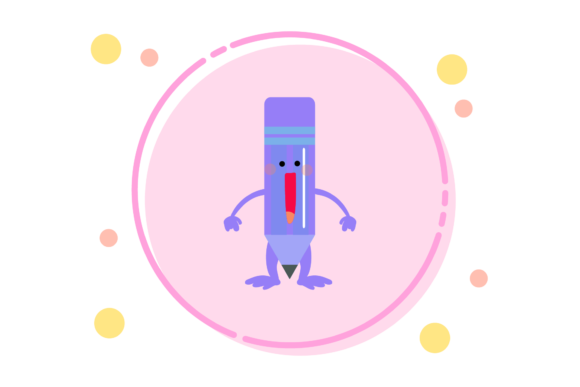
Back to School Kawaii Pencil Circle Art is a digital design bundle typically built around a central circular composition of cute, stylized pencils and related school motifs. The kawaii aesthetic gives these designs a friendly, approachable look, making them popular for classroom decorations, newsletter headers, sticker sheets, scrapbook pages, social media posts, and small business branding during the back-to-school season. The product you are considering includes six digital files: AI, EPS, SVG, DXF, JPG, and PNG formats, each on a 1920x1280 pixel canvas. The variety of formats is intended to cover everything from professional vector editing to simple printing.
The appeal is obvious. A single purchase gives you flexibility across multiple projects. But that flexibility only helps if you understand what each format does and how to use it correctly. Many buyers jump in without that knowledge and end up frustrated.
Mistake One: Choosing the Wrong File Format for Your Project
The most common error people make is assuming one file fits all purposes. You might open the JPG and try to enlarge it for a banner, only to find it turns blurry. Or you might take the SVG into a basic photo editor and wonder why the layers do not separate. Each format in the bundle serves a distinct purpose, and using the wrong one undermines your results.
Here is a quick breakdown of what each format is meant for:
- AI and EPS files – These are vector formats intended for professional design software like Adobe Illustrator or CorelDRAW. They preserve crisp lines at any size, making them ideal for large prints, signs, or merchandise. If you do not have vector editing software, these files will not open correctly.
- SVG files – Also vector-based, SVGs work well in design programs and many cutting machines (like Cricut or Silhouette). They are great for vinyl decals, stencils, or laser cutting. However, not all free image viewers support SVG properly.
- DXF files – These are technical drawing files often used with CAD software or certain cutting machines. If you plan to use the design with a laser cutter or plotter, DXF is your friend. But if you just need a simple image, this format will confuse more than help.
- JPG and PNG files – These are raster formats. The JPG is good for general use, web sharing, and printing at the given canvas size. The PNG supports transparency, so you can place the design over backgrounds without a white box. Both are pixel-based, meaning enlarging them beyond 1920x1280 pixels will cause visible quality loss.
How to avoid this mistake: Before you use any file, ask yourself what the final output will be. For print at large scale, go with AI, EPS, or SVG. For on-screen use or small prints, PNG or JPG work fine. If you are using a cutting machine, check whether your device prefers SVG or DXF. Matching the format to your workflow eliminates most problems before they start.
Mistake Two: Ignoring Canvas Size and Resolution Limits
Another oversight relates to the 1920x1280 pixel canvas. That size is reasonable for web graphics, small posters, or sticker sheets, but it is not suitable for large banners or high-resolution wall art. Some buyers assume they can stretch the JPG or PNG to any dimension without consequence. When they do, the image becomes pixelated, and the kawaii details lose their charm.
Why this happens: Raster files (JPG and PNG) have a fixed number of pixels. Enlarging them forces the software to guess missing information, resulting in soft edges and blur. Vector files (AI, EPS, SVG) do not have this limitation because they store mathematical instructions for shapes instead of pixels. If you need a large print, you should use the vector formats, not the raster ones.
Better approach: Determine your required output size before opening the file. For anything larger than about 10 inches on the longest side, switch to a vector format. If you must use a raster file and need more resolution, you can upscale using specialized software, but results vary. Starting with vectors saves you that hassle entirely.
Mistake Three: Overlooking Editing Tools and Skill Requirements
A related issue is assuming you can edit the files with any basic image viewer. The AI, EPS, and SVG formats require appropriate software. Many buyers who do not have Adobe Illustrator or a compatible vector program try to open these files in Paint or Preview and see nothing useful. They then think the product is defective when the reality is a software mismatch.
Real-world example: A teacher downloads the bundle hoping to customize a pencil circle design for her classroom door. She opens the AI file in a free photo editor that does not support vectors. The file appears blank or garbled. She assumes the design is broken and leaves a negative review, when all she needed was to use the PNG or a compatible vector program.
Practical advice: Check what software you have before purchasing. If you only have basic tools, stick with the JPG or PNG. If you own Illustrator, CorelDRAW, Inkscape, or Affinity Designer, the vector formats give you full control over colors, text, and layout. Many free vector editors like Inkscape handle SVG and sometimes EPS, so there are affordable options even without a paid subscription.
Mistake Four: Using the Design Without Checking Licensing Terms
Though licensing is not always top of mind, it matters enormously for small business owners and creators. Some files are sold with commercial licenses, others with personal use only. If you plan to sell items made with Back to School Kawaii Pencil Circle Art, such as printed stickers, t-shirts, or digital printables, you need to verify what the seller allows.
Common misunderstanding: Buyers sometimes assume purchasing a digital file automatically grants full commercial rights. In many cases, standard purchases only cover personal use or small-scale handmade goods. Mass production, resale of the digital file itself, or use in certain print-on-demand platforms may require an extended license.
How to proceed safely: Read the product description and any terms of use provided by the seller. If the information is unclear, contact them before buying. Keeping a record of the license terms protects you from future disputes. Even the cutest design is not worth a legal headache down the road.
Mistake Five: Failing to Test the Design Before Final Production
Another avoidable error is skipping a test run. Whether you are printing stickers, cutting vinyl, or creating a digital banner, always create a small test version first. Colors can shift between screens and printers. Cutting machines may misalign with design boundaries. A test run lets you catch problems early.
Example of a costly oversight: A small business owner prints 200 sheets of pencil circle stickers for back-to-school giveaways, only to realize the transparent PNG was not properly exported, leaving unwanted white edges around the design. The entire batch looks unprofessional, and she has to redo everything.
Better workflow: Print a single sheet or cut one decal. Check alignment, color accuracy, and edge quality. Adjust your settings as needed, then proceed with the full run. This small step saves time, money, and frustration.
Mistake Six: Not Organizing or Backing Up Your Files
When you purchase a bundle with six formats, it is easy to download once and forget about them. But months later when you need the SVG for a new project, you might find only the JPG in your downloads folder. Or your hard drive fails and the files are gone.
Why it matters: The value of the bundle lies in having all formats available. Losing track of the vector files limits your future options. Relying on redownloading from a marketplace is not always possible if the listing is removed or your purchase history expires.
Simple solution: Create a dedicated folder for the design with subfolders for each format or project type. Back up the folder to cloud storage or an external drive. Label it clearly with the design name and purchase date. This habit ensures you always have access to the exact file you need, even years later.
Practical Guidance for Getting the Most Out of Back to School Kawaii Pencil Circle Art
Now that the common pitfalls are clear, here is a straightforward checklist to follow anytime you buy a similar digital design bundle:
- Identify your output – Know whether you need print, web, or cut files before choosing a format.
- Check your software – Confirm compatibility with the vector formats if you intend to edit them.
- Understand the canvas size – Work within the 1920x1280 resolution for raster files, or use vectors for larger needs.
- Review licensing – Know what you can and cannot do with the design commercially.
- Run a test – Verify color, scale, and alignment on a small sample before full production.
- Organize everything – Keep all six formats accessible and backed up.
Following these steps transforms a simple download into a reliable, versatile asset for your projects. Back to School Kawaii Pencil Circle Art can work beautifully for classroom materials, small business promotions, handmade gifts, or digital content. The key is respecting the technical details behind the cute exterior.
Final Thoughts on Choosing and Using Digital Design Bundles
The appeal of kawaii back-to-school graphics is easy to understand. They bring warmth, nostalgia, and a touch of playfulness to any project. But whether you are a hobbyist making a scrapbook or an entrepreneur launching a seasonal product line, the difference between a smooth experience and a frustrating one often comes down to preparation.
Take a few minutes before you open any file to ask the right questions. What format serves your final output? Do you have the necessary tools? Is the canvas size adequate? What does the license allow? These small checks prevent the most common mistakes people make with Back to School Kawaii Pencil Circle Art and similar products.
When used correctly, the six-file bundle becomes more than just a set of cute images. It becomes a flexible toolkit that adapts to your workflow, whether you are designing digitally, printing at home, or sending files to a professional vendor. And that is the real value of a well-chosen design bundle.