Sixth Grade Back to School Sublimation: A Practical Resource for Creators and Entrepreneurs
Preparation for the back-to-school season goes beyond shopping lists and classroom seating charts. For many small business owners, educators, and hobbyists, this time of year represents a concentrated period of production, design, and product launches. Among the most versatile assets available for this season is the Sixth Grade Back to School Sublimation design. This digital file offers a ready-to-use graphic that can be transferred onto a wide range of surfaces, making it an efficient tool for anyone who creates products or content around the start of the school year.
Understanding how to integrate this design into your existing workflow can save time, reduce material waste, and help you produce consistent, high-quality items. Whether you are fulfilling custom orders, building inventory for an online shop, or creating personal projects for your own family, the design serves as a reliable starting point that can be adapted to multiple formats and mediums.
What Is Sixth Grade Back to School Sublimation and Why It Matters
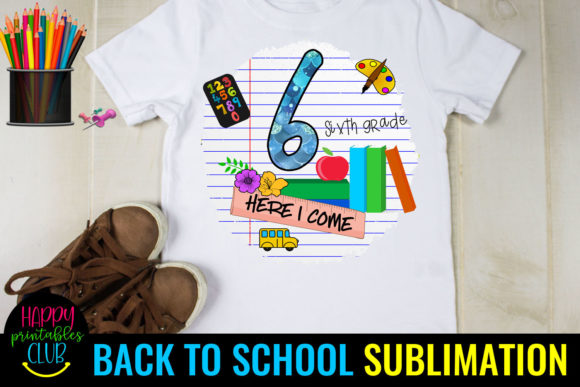
At its core, a sublimation design is a digital image intended for transfer onto physical objects using heat and pressure. The Sixth Grade Back to School Sublimation file is a 12x12 inch PNG at 300 DPI, which provides sufficient resolution for both small items like coasters and larger surfaces like t-shirt fronts. The design is created specifically for the sixth-grade milestone, capturing the transition from elementary to middle school with imagery and typography that appeals to students and parents alike.
For creators and entrepreneurs, the value of this file lies in its versatility and ease of use. Instead of spending hours designing from scratch, you can incorporate the pre-made graphic into your own projects. This is especially useful during the back-to-school rush, when speed and reliability directly affect your ability to meet customer demand. The file comes in a ZIP folder containing one PNG, which simplifies storage, organization, and retrieval across different devices and platforms.
Because this is a digital download, you retain control over when and how you use the design. You can print it once or reuse it multiple times, scaling your production according to your needs without worrying about inventory of physical items. This model aligns well with just-in-time production workflows, where you create products only after receiving an order or when you have confirmed demand.
How This Design Asset Fits Into a Broader Workflow
Integrating a sublimation design into your process involves more than just printing and pressing. The design can be applied at different stages of a project, and understanding where it fits best helps you avoid bottlenecks and rework.
Pre-Project Planning and Preparation
Before you begin any production run, review the design on your monitor and consider how it will appear on your chosen substrate. The download page notes that colors may vary between your screen and the final print due to differences in monitor calibration. Planning for this variance is a practical step. If you are producing items for a client or for a specific order, print a test sample on a similar material to verify color accuracy and alignment. This upfront check reduces the chance of wasted materials later.
Organize your files so that the PNG is easy to find when you need it. Create a folder structure that separates designs by grade level, season, or product type. If you manage multiple projects, tagging the file with relevant keywords such as "sixth grade," "back to school," and "sublimation" helps you locate it quickly during busy periods. This small organizational habit pays off when you are working on several orders simultaneously.
During the Creative or Production Process
When you are ready to produce items, the design can be resized or repositioned within your sublimation software. Because the file is 12x12 inches at 300 DPI, it offers good flexibility for scaling down to smaller products like mugs or tumblers. However, scaling up beyond its original size may reduce sharpness, so test any enlargement before committing to a final print.
The design works with most sublimation printers and heat presses, provided you use compatible transfer paper and settings. If you are new to sublimation, run a few trials with the same temperature, time, and pressure settings recommended by your equipment manufacturer. Document the settings that yield the best results with this particular design, so you can replicate them consistently. This documentation becomes part of your standard operating procedure and helps train any assistants or employees who handle production.
Post-Project Applications and Extensions
Once the design is transferred onto your primary product, consider secondary uses for the leftover space on your transfer paper or for additional prints. The same design can be used on smaller items like coasters, tags, or labels, which you can bundle with larger purchases as a value add. For example, if you are selling a sixth-grade tumbler, you could include a matching coaster or a small notebook cover using the same graphic. This creates a coordinated set that customers may perceive as more polished and intentional.
For digital creators, the PNG file can also be imported into design software for use in scrapbooking, planner stickers, invitations, greeting cards, flyers, or social media graphics. The file is not limited to physical transfers; it can serve as an element in a larger digital composition. This dual use extends the value of your purchase beyond sublimation alone.
Practical Use Cases Across Different Platforms and Products
The Sixth Grade Back to School Sublimation design is suited for a variety of substrates and formats. Understanding the common applications helps you decide which products to develop and how to allocate your production time.
Apparel and Drinkware
T-shirts are a staple product for back-to-school launches. The design can be centered on the chest or placed on the back for a bolder look. If you offer sizes for both students and parents, you can use the same design file without modification, scaling it proportionally for adult sizes. Mugs and tumblers are another popular category, especially for parents or teachers who want to celebrate the milestone. The 12x12 dimension works well for standard 11-ounce mugs and most 20-ounce tumblers. Test the wrap-around alignment to ensure the design fits smoothly without distortion.
Coasters are a lower-cost option that can be produced quickly and sold individually or in sets. They require less material and pressing time, making them a good candidate for high-volume production. If you are selling at a school fair or local market, a coaster featuring the design can serve as an impulse purchase or a free gift with a larger item.
Paper Goods and Digital Projects
For creators who focus on printables and paper products, the design can be incorporated into notebook covers, binder inserts, or journal pages. If you use a cutting machine, you can create stickers or labels that match the overall theme. These items appeal to students who want to personalize their supplies and to parents who appreciate coordinated stationery.
In the digital space, the PNG file can be used in classroom newsletters, event flyers, or social media posts announcing a back-to-school sale. Because the design is already optimized at 300 DPI, it prints cleanly on paper and displays well on screens. This cross-platform compatibility means you can develop a consistent visual identity across physical and digital products without creating separate assets for each medium.
Integrating the Design With Other Tools and Resources
No design file operates in isolation. Your ability to produce finished items depends on how well the file interacts with your hardware, software, and supply chain. Start by confirming that your sublimation printer and heat press are calibrated for the paper and substrate you plan to use. If you outsource printing to a fulfillment service, check their file requirements and color profile preferences. Providing the PNG in its original format without compression errors ensures the best outcome.
If you use design software like Adobe Photoshop, Canva, or Affinity Designer, the PNG file can be opened directly or placed as a layer. You can combine it with other graphics, add text for personalization, or adjust the color balance if needed. For those who sell on print-on-demand platforms, upload the design directly to your product listings. The transparent background of the PNG makes it easy to overlay on mockup templates, which helps you create accurate product previews without printing physical samples.
Consider pairing the design with complementary fonts, patterns, or school-themed elements you already own. This allows you to create variations of the same product line, such as a version with the student's name or a version with a different motivational quote. Expanding the line without starting from scratch increases your catalog depth efficiently.
Quality Control and Preparation Tips for Best Results
Even a well-designed file can produce disappointing results if preparation is rushed. To achieve consistent quality, start by verifying your monitor's color accuracy. If possible, use a calibrated monitor or compare the on-screen colors to a printed reference. For sublimation, color output depends on factors like paper type, press temperature, and dwell time. Run a small test print on a scrap piece of substrate before committing to your final product. This test reveals whether the colors match your expectations and whether the design is positioned correctly.
Check the file itself for any artifacts or resolution issues. The 300 DPI specification is a good indicator of quality, but if you plan to enlarge the design significantly, inspect the edges and text for pixelation. Adjust your software's interpolation settings or consider using a vector version if available. For most standard applications, the given resolution will perform well.
Store the ZIP file in a secure location after downloading. Digital assets can be accidentally deleted or corrupted, so keep a backup on an external drive or cloud storage. This ensures you can re-access the design even if your primary computer fails. If you manage a team, establish a shared folder with read-only access to prevent accidental modifications to the original file.
Long-Term Value and Reusability
One of the strongest arguments for investing in a digital design like Sixth Grade Back to School Sublimation is its reusability. Unlike physical inventory, which can become outdated or sell out, a digital file remains available indefinitely. You can use it year after year, adjusting your product mix as trends change. For example, one season you might emphasize apparel, while the next season you focus on drinkware or digital downloads. The design adapts to your strategy rather than forcing you to commit to a single format.
If you run a business that serves schools or parent groups, the design can be licensed for limited runs or custom orders. Because you own the file after purchase, you are free to reproduce it across different items without additional licensing fees. This is particularly relevant for entrepreneurs who attend seasonal markets or pop-up events, where speed and variety are critical. Having a reliable design file in your library reduces the time between idea and finished product.
For personal use, the design becomes a keepsake that can be applied to items for a child's locker, desk, or bedroom. Parents and educators often appreciate having a consistent theme across multiple items, and the digital format allows for easy scaling from a small sticker to a large poster. Over the years, you can create a collection of school memories by using the same design style across different grade levels.
Ultimately, the Sixth Grade Back to School Sublimation file is a practical asset that supports both creative expression and commercial efficiency. By understanding its specifications, planning your production workflow, and testing your materials, you can integrate this design smoothly into your routine. Whether you are preparing for a single custom order or a full product launch, the file offers a reliable foundation that saves time, reduces guesswork, and helps you deliver polished results.