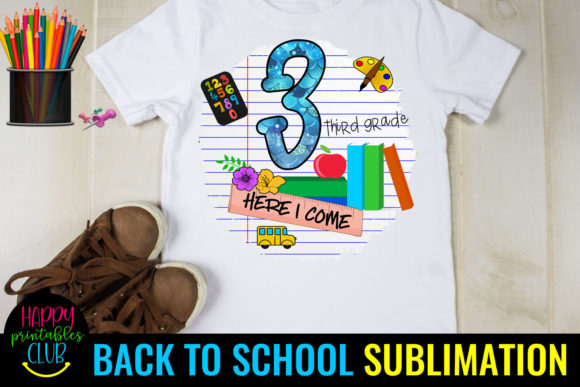
Third Grade Back to School Sublimation: Creative Ideas and Practical Uses for Every Project
Back-to-school season is a time of excitement, new beginnings, and fresh supplies. For parents, teachers, and crafters, finding the perfect design to celebrate a child's first day of third grade can turn an ordinary item into a cherished keepsake. Enter third grade back to school sublimation —a vibrant, durable, and endlessly versatile way to personalize everything from clothing to classroom accessories. Whether you're a seasoned sublimation enthusiast or just discovering the craft, this article will walk you through what sublimation is, why these designs are so popular, and how you can use them in countless creative projects. We'll also clarify common questions about digital downloads, color fidelity, and file specifications so you can get the most out of your purchase.
What Is Sublimation and Why Is It Perfect for Back-to-School Projects?
Sublimation is a printing method that uses heat to transfer dye directly onto materials like polyester, coated ceramics, and polymer-coated surfaces. Unlike standard iron-on transfers, sublimation inks become part of the substrate—they don't sit on top of the material. This means the design won't peel, crack, or fade, even after repeated washing or daily use. For a third grade back to school design, this durability is a huge advantage. A shirt or mug made with sublimation stays bright and sharp, making it ideal for a child's busy school year.
The process itself is straightforward: you print your design onto special sublimation paper using sublimation ink, then use a heat press to transfer the image onto your chosen item. The heat turns the solid ink into a gas, which bonds with the fibers or coating. When it cools, it returns to a solid state—permanently embedded. This is why sublimation is the go-to method for personalized gifts, small business products, and DIY crafts. With a third grade back to school sublimation design, you can create professional-looking items at home or for sale.
Why Third Grade Designs Are Especially Popular
Third grade is a milestone year. Children are becoming more independent, reading to learn, and developing strong friendships. A design that celebrates "Third Grade" feels both nostalgic and forward-looking. Parents love capturing this moment, and teachers often use themed items to build classroom community. Sublimation designs allow for bright colors, playful fonts, and custom details—like the child's name or school year—that make each piece unique. Because sublimation handles gradients and tiny details so well, these designs can include whimsical school supplies, books, apples, and number themes that pop with vibrancy.
Endless Creative Possibilities: Where to Use Your Third Grade Sublimation Design
One of the best features of a digital sublimation design is its versatility. The same PNG file can be resized, rotated, and applied to dozens of different items. Here are the most popular ways to use a third grade back to school sublimation design, from everyday wear to special keepsakes.
Apparel and Accessories
- T-shirts and sweatshirts: A classic first-day-of-school shirt. Use a white or light-colored polyester blend for the brightest colors. Add the child's name or a fun phrase like "Third Grade Rocks."
- Tumblers and water bottles: Perfect for staying hydrated in class. Sublimation on stainless steel tumblers with a polymer coating gives a durable, dishwasher-safe finish.
- Coasters and mugs: Great for teachers' gifts or a special breakfast mug for your third grader. Mugs with a white ceramic coating work beautifully for sublimation.
- Backpacks and lunch bags: Personalize a plain polyester backpack or lunch tote so your child can easily spot their things.
Paper Crafts and Planner Projects
Since you receive a high-resolution 300 DPI PNG file, the design is perfect for print-on-paper projects as well. Many crafters use sublimation designs for:
- Scrapbooking: Add the design to a layout commemorating the first day of third grade. It becomes a colorful anchor for photos and journaling.
- Planner stickers: Print the design onto sublimation sticker paper (or use it as a digital clipart in your planner app). Mark important school dates, homework reminders, and special events.
- Invitations and greeting cards: Throw a back-to-school party or a "meet the teacher" event. Use the design on cards, flyers, and tags to tie everything together.
- Notebook covers and journal covers: Sublimate directly onto a composition book or use the design as a decorative insert for a clear-view binder.
Home Décor and Gifts
- Canvas prints and wall art: Sublimate onto polyester canvas for a gallery-worthy piece that celebrates the school year.
- Pillow covers and blankets: A personalized pillow for a reading nook or a cozy throw for the couch adds a warm touch to any room.
- Tags and labels: Create luggage tags for field trips, pencil case labels, or gift tags for teacher appreciation presents.
- Cliparts for digital use: Because the file is a PNG with a transparent background (or can be used as is), it works wonderfully as clipart in classroom newsletters, worksheets, or social media posts.
Understanding Your Digital Download: File Specifications and What They Mean
When you purchase a third grade back to school sublimation digital download, you'll receive a ZIP file containing 1 PNG file. Let's break down the specifications so you know exactly what you're working with.
Size: 12 x 12 Inches
A 12x12 inch canvas is a standard size for sublimation blanks, especially for larger items like tumblers, T-shirts, and tote bags. It gives you plenty of room to center the design or crop it for smaller projects. For mugs or coasters, you can easily resize the design in your editing software (like Photoshop, Canva, or Affinity) without losing quality—as long as you maintain the aspect ratio and work within the 300 DPI resolution.
Resolution: 300 DPI (Dots Per Inch)
This is the gold standard for professional printing. A 300 DPI image ensures crisp edges, smooth gradients, and sharp text when printed. Lower resolutions can result in pixelation or blurriness, especially on larger surfaces. With a 300 DPI PNG, your sublimation transfers will look clean and vibrant every time. It also means you can scale the design down for stickers or up for a poster with excellent clarity.
File Format: PNG
PNG is a lossless format that supports millions of colors and transparency (if the design includes it). This makes it ideal for both sublimation (where you often print the entire image) and for use as clipart (where you want to overlay it on other backgrounds). Unlike JPEG, PNG doesn't introduce compression artifacts, so your design remains true to the original.
Important Things to Know Before You Download
Digital Download Only: This listing is for a digital file—no physical products will be shipped to you. After purchase, you'll receive a link to download the ZIP file. You can then print the design yourself or use it with a sublimation printing service.
Color Variance: Colors may appear slightly different on your screen compared to the actual printed result. Monitor calibration, lighting, and the type of sublimation printer you use all play a role. We recommend doing a small test print before producing a large batch to ensure the colors match your vision.
Resolution Check: Always confirm that your printer and sublimation paper are compatible with 300 DPI files. Most modern sublimation setups handle this resolution without issue, but it's good practice to check your software's print settings.
Common Misunderstanding: "Why doesn't the color look exactly like the preview?"
This is one of the most frequent questions we hear. Screen colors are created with light (RGB), while printing uses ink or dye (CMYK). Sublimation inks have a specific color gamut, and finished results can vary based on the substrate (cotton blends won't work as well as polyester), heat press temperature, and pressure. Always test on a scrap piece of material before committing to your final product. This small step saves frustration and ensures your third grade back to school creation comes out exactly as you imagined.
Step-by-Step Guide: Turning Your Sublimation Design into a Finished Product
If you're new to sublimation, here's a simple walkthrough to get started. Even experienced crafters may pick up a tip or two.
- Unzip the file: Extract the PNG from the ZIP folder to a location you can easily find on your computer.
- Open in your editing software: Load the PNG into a program like Photoshop, Canva Pro, or Silhouette Studio. If you need to add a name or customize the design, do it now. Keep the resolution at 300 DPI.
- Mirror (flip) the image: This is crucial for sublimation. Because the transfer is applied face-down, the image must be reversed horizontally. Most sublimation software has a "mirror" or "flip horizontal" button. If you forget this step, your text and any directional elements will be backward on the final product.
- Print onto sublimation paper: Use a printer loaded with sublimation ink and proper sublimation paper. Standard inkjet paper won't hold the ink correctly.
- Heat press: Pre-heat your blank (shirt, mug, coaster, etc.) for a few seconds to remove moisture. Then place the printed paper face-down on the item. Apply even pressure and heat according to your blank's recommended time and temperature (typically around 385–400°F for 45–60 seconds).
- Peel while warm or cool: Some papers recommend "cold peel," others "warm peel." Check the instructions that came with your sublimation paper. Once peeled, your design is permanently fused.
For paper crafts (scrapbooking, stickers, cards), you don't need to mirror the image—just print it as is onto quality cardstock or sticker paper. The 300 DPI resolution ensures your print will be sharp and gallery-worthy.
How Third Grade Sublimation Fits into Modern Life and Business
Back-to-school designs aren't just sentimental—they're also a booming niche in the small business and creative entrepreneurship world. Many crafters sell personalized items on platforms like Etsy, Amazon Handmade, or at local markets. A third grade back to school sublimation design can be the foundation for a micro-business that serves local families, teachers, and school events.
For teachers, these designs are a way to build classroom identity. Imagine a set of matching name tags, a class banner, and a personalized mug for each student—all created from the same sublimation file. Schools and PTAs also commission custom items for fundraisers or welcome events. Because the design is digital, you can produce as many or as few copies as you need, making it a low-risk, high-reward product line.
For parents, the joy of seeing your child wear a shirt you designed themselves—or drink from a cup featuring their favorite character alongside "Third Grade"—is immeasurable. It turns a routine school morning into a mini celebration. And because sublimation is so durable, that shirt can become a hand-me-down or a keepsake in a memory box years later.
Building a Broader Understanding of Sublimation Art and Digital Downloads
If you're new to the world of digital crafting, you might wonder: Why buy a digital file instead of a physical product? The answer lies in flexibility and control. A digital download gives you unlimited printing rights (usually for personal use or small business use, depending on the license). You can print it on any compatible blank you choose, at any size, in any quantity you like. You can also modify it—add a name, change a color, combine it with other elements—as long as you respect the creator's terms.
Sublimation itself is an intersection of technology and creativity. It requires basic hardware (a printer and heat press) but rewards you with professional-grade results. The learning curve is gentle: most beginners produce a successful transfer on their first try if they follow instructions. The community is also incredibly supportive, with countless YouTube tutorials and Facebook groups dedicated to sharing tips and troubleshooting.
Another common assumption is that sublimation only works on white or very light backgrounds. While it's true that the ink is semi-transparent (so it shows best on white or pale colors), you can sublimate on dark polyester items using a special white base layer or by choosing designs with a solid background. However, for the brightest, most vibrant results, a white or cream blank is recommended. Your third grade back to school design will absolutely pop on a white T-shirt or a white ceramic mug.
Clarifying the "Digital Download" Misconception
Some buyers worry that a digital file might be low quality or hard to use. The specifications of 12x12 inches at 300 DPI mean you're receiving a print-ready file. It's not a tiny web image—it's a full-scale, high-resolution artwork. If you have access to a sublimation printer or a local print shop that offers sublimation services, you can have this design turned into a physical product in minutes. For those who don't own a printer, online print services allow you to upload the PNG and order custom mugs, shirts, and more.
Your Creative Journey Starts Here
Whether you're crafting a first-day-of-school outfit, a teacher gift, or a set of classroom decorations, a third grade back to school sublimation design gives you a beautiful, flexible starting point. You get a professional-grade PNG file (12x12 inches at 300 DPI) that you can use on shirts, mugs, coasters, tumblers, scrapbook pages, planner stickers, invitations, greeting cards, flyers, tags, labels, craft items, notebook covers, journals, and so much more. The only limit is your imagination—and the polyester count of your blank.
Remember that colors may vary slightly between your screen and the printed result, so always do a test run. And since this is a digital download, you can start creating immediately—no waiting for shipping. Embrace the joy of back-to-school season with a personalized touch that third graders (and their families) will treasure. Happy crafting!
This article is for informational and educational purposes. All designs are sold as digital downloads only. No physical product is shipped. Always follow your sublimation equipment manufacturer's guidelines for best results.